Let's talk about something that's probably keeping you up at night: claim denials. If you're a healthcare provider in 2026, you already know that denials aren't just annoying paperwork, they're literally bleeding your practice dry. The average denial costs between $25 to $117 to rework, and when you're dealing with dozens (or hundreds) of them monthly, that adds up fast.
The good news? AI and automation have completely transformed how smart practices handle denial prevention this year. But here's the catch: if you're still making these seven common mistakes, even the best technology won't save you.
Let's dig into what's actually going wrong and how modern solutions are fixing it.
Mistake #1: Playing Defense Instead of Offense
The Problem: Most practices wait until a claim gets denied before taking action. You submit, cross your fingers, and then scramble when the denial hits your inbox two weeks later. This reactive approach is expensive and exhausting.
How AI Fixes It: In 2026, predictive denial analytics have become game-changers. AI-powered systems now analyze your historical claim data, payer behavior patterns, and current coding guidelines to flag high-risk claims before you hit submit. Think of it as having a crystal ball that tells you "Hey, this claim is probably going to get denied because United Healthcare has been rejecting similar claims for the past three months."
These systems learn from every claim you process, getting smarter over time. They'll catch things like missing prior authorizations, coverage gaps, or documentation that doesn't match payer requirements: all before the claim goes out the door.

Mistake #2: Sloppy Front-End Processes
The Problem: Your front desk staff is juggling phones, scheduling, and patient check-ins. In the chaos, insurance verification becomes a quick phone call or a "we'll check it later" situation. Poor patient registration and weak insurance verification account for a huge chunk of preventable denials.
How AI Fixes It: Real-time eligibility verification tools now check coverage the moment an appointment is scheduled or when a patient walks through your door. These systems automatically alert your staff to coverage issues, missing authorizations, or inactive policies before services are rendered.
No more finding out two weeks after a procedure that the patient's insurance lapsed last month. The system catches it immediately, giving you time to collect payment arrangements or reschedule if needed.
Mistake #3: Documentation That Doesn't Tell the Whole Story
The Problem: Your clinicians are brilliant at treating patients but sometimes their documentation lacks the specific details payers need. Missing time documentation for E/M codes, vague medical necessity statements, or incomplete clinical justification can sink an otherwise valid claim.
How AI Fixes It: Documentation automation tools now act as a safety net, validating that clinical notes contain all necessary elements before claims go out. These systems check for time stamps, medical decision-making complexity, and service justification, basically making sure your documentation can stand up to payer scrutiny.
Some advanced platforms even use natural language processing to analyze clinical notes and suggest areas that need more detail, helping providers document more completely without adding hours to their day.
Mistake #4: Coding Errors Running Wild
The Problem: Here's a sobering stat: coding inaccuracies cause 30-40% of all denials. Whether it's incorrect modifiers, bundling issues, or codes that don't match the documentation, coding errors are a massive revenue killer.
How AI Fixes It: Automated claim scrubbing technology has gotten incredibly sophisticated in 2026. These systems validate every code against multiple databases: NCCI edits, payer-specific guidelines, LCD/NCD requirements, and medical necessity rules: before submission.
The best part? They learn payer-specific quirks. If Blue Cross in your state consistently denies a particular code combination that other payers accept, the AI remembers and warns you. It's like having a coding expert who's memorized every payer's rulebook sitting at your elbow.
Mistake #5: Manual Processes Slowing Everything Down
The Problem: Paper claims, manual data entry, and siloed systems create bottlenecks that delay submission and increase errors. When claims sit in a queue waiting for manual review, your cash flow suffers and the chance of errors multiplies.
How AI Fixes It: EDI (Electronic Data Interchange) submission combined with workflow automation has become the standard for high-performing practices. Claims flow electronically from your EHR through automated scrubbing and directly to payers: no paper, no manual keying, no delays.
Automated follow-up systems also track claim status and automatically query payers on unpaid claims after a set timeframe. Instead of your staff making dozens of phone calls to check on claim status, the system does it automatically and alerts you only when action is needed.

Mistake #6: Flying Blind Without Data
The Problem: Many practices have no idea what their denial rate actually is, which payers cause the most problems, or which denial reasons are most common. Without tracking KPIs and denial trends, you're essentially guessing about where to focus improvement efforts.
How AI Fixes It: AI-powered analytics dashboards give you a bird's-eye view of your revenue cycle health. Modern platforms track denial rates by payer, provider, and reason code. They show you appeal win rates, days in AR, and trends over time: all in real-time.
These insights let you spot patterns before they become expensive problems. If you suddenly see a spike in medical necessity denials from a specific payer, you can investigate and adjust your documentation immediately instead of losing thousands of dollars over months.
Mistake #7: Inconsistent or Nonexistent Appeal Processes
The Problem: When denials do happen, many practices either don't appeal at all or handle appeals inconsistently. Staff members use different templates, attach varying levels of documentation, and appeals fall through the cracks because there's no organized tracking system.
How AI Fixes It: Automated appeals management systems route denied claims to the right team members based on denial reason and specialty. They apply standardized, payer-specific appeal templates that include all required information and documentation.
These systems track appeal deadlines, follow up automatically, and analyze which arguments work best for different payers and denial reasons. Over time, your appeal win rate improves because you're using proven strategies instead of reinventing the wheel every time.
The USA-Based Advantage That Makes All the Difference
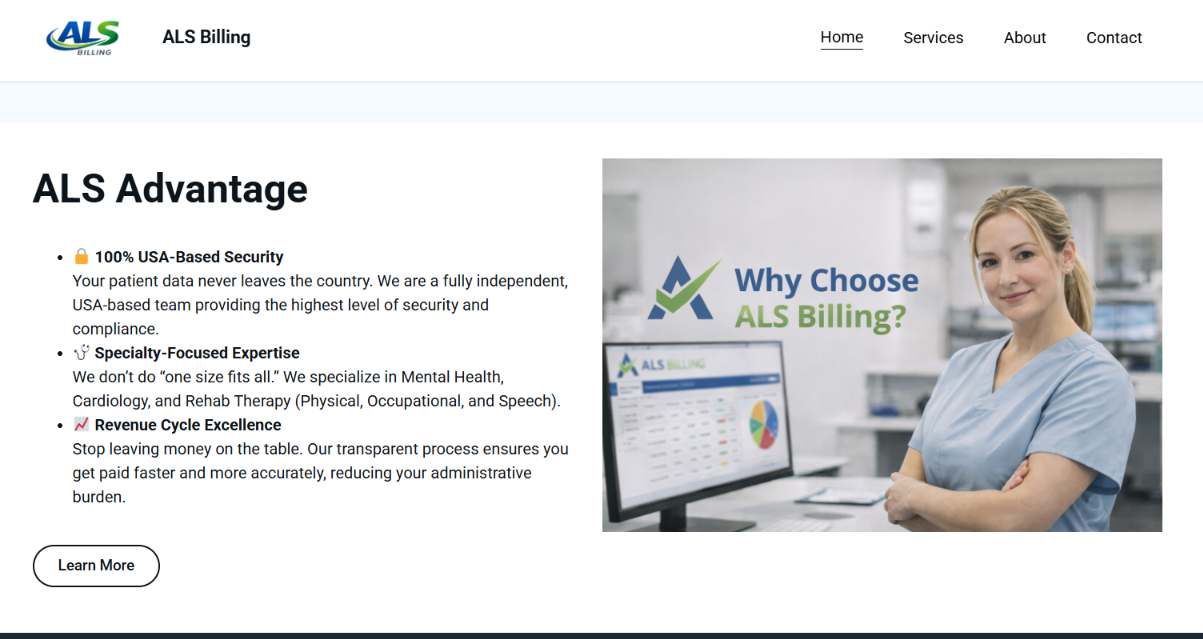
Here's something that doesn't get talked about enough: where your billing partner is located matters more than ever in 2026. While offshore billing companies might promise lower costs, they can't match the advantages of working with a USA-based team like ALS Billing.
Why does location matter? Real-time communication during your business hours, immediate understanding of US payer policies and regulatory changes, and: critically: better data security compliance with HIPAA requirements. When denial trends shift or payer rules change, you need a partner who can pivot quickly, not one operating on the other side of the world.
At ALS Billing, we combine cutting-edge AI technology with experienced USA-based specialists who understand the nuances of medical billing across specialties: from mental health to cardiology to rehab therapies. Our team doesn't just prevent denials; we optimize your entire revenue cycle to keep cash flowing and your practice thriving.
The Bottom Line
Denial prevention in 2026 isn't about working harder: it's about working smarter with the right technology and the right partner. Practices using automated RCM solutions consistently achieve lower denial rates and faster reimbursements, with strong front-end processes alone preventing up to half of all avoidable denials.
Stop losing revenue to preventable mistakes. The technology exists to fix these problems, and the practices that adopt it are leaving their competition in the dust.
Ready to stop the revenue leak? Get in touch with ALS Billing and let's talk about how we can transform your denial prevention strategy with the perfect mix of AI-powered automation and USA-based expertise. Your revenue cycle deserves better than crossed fingers and reactive scrambling.