
If you're running a hospice agency, you already know that billing is a whole different beast compared to other healthcare services. Between Medicare's per diem structures, Medicaid's state-by-state quirks, and the emotional sensitivity required when dealing with end-of-life care, there's a lot riding on getting every claim right the first time.
And if you're billing in Ohio? Well, let's just say the Ohio Department of Medicaid (ODM) has some very specific ideas about how things should be done.
Let's break down the most common pitfalls, what makes Medicaid (especially Ohio's version) so tricky, and why having a USA-based billing partner who understands the nuances can make all the difference.
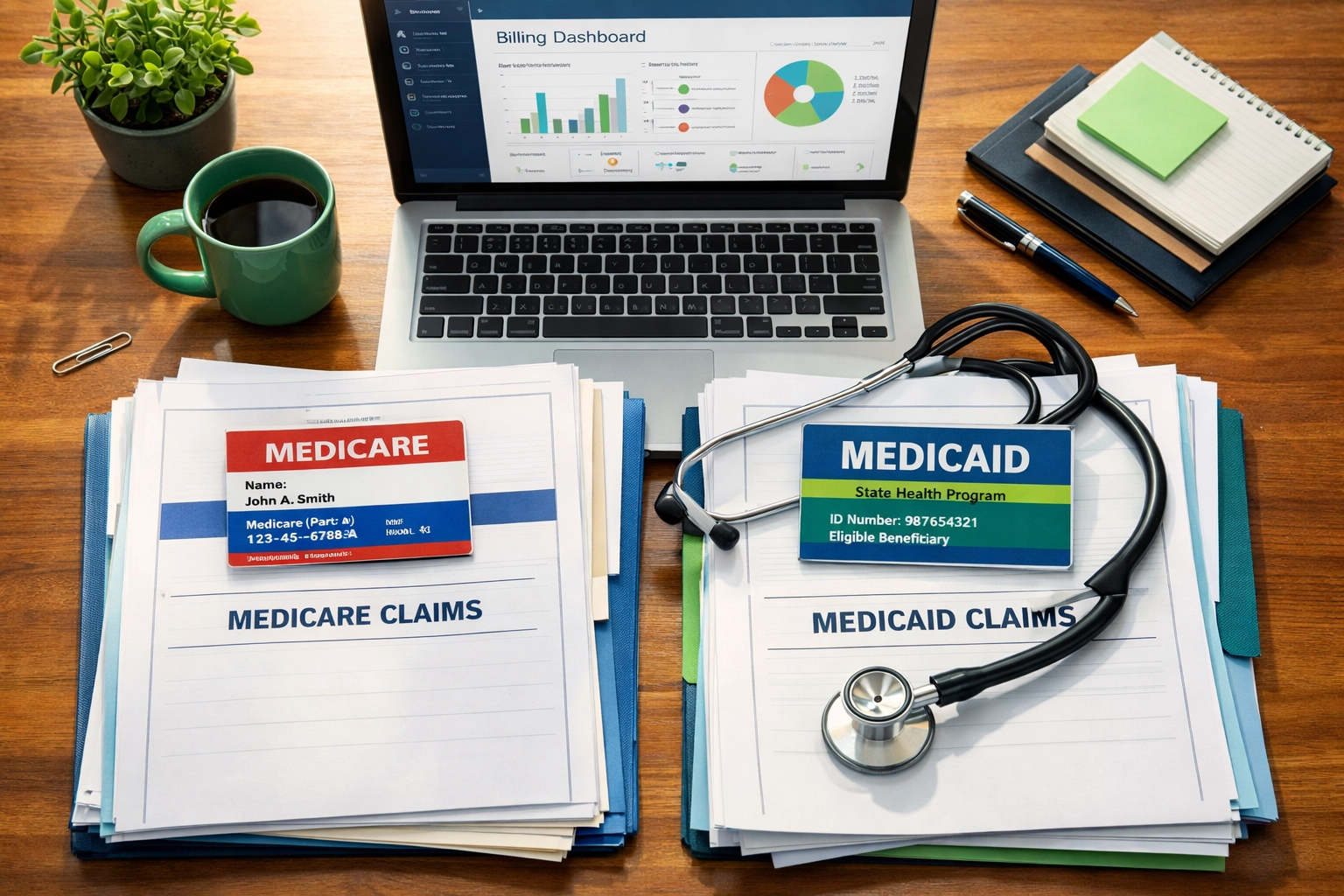
The Medicare vs. Medicaid Hospice Billing Split
First things first: Medicare and Medicaid handle hospice billing completely differently.
Medicare offers a comprehensive hospice benefit with straightforward per diem rates based on the level of care: routine home care, continuous home care, inpatient respite, or general inpatient care. Medicare pays the hospice directly regardless of how many services the patient actually receives that day. It's predictable, federally standardized, and generally easier to navigate.
Medicaid, on the other hand, is an optional benefit that varies wildly from state to state. Each state sets its own rates, its own documentation requirements, and its own rules about what needs to be billed where. That's where things get messy: especially in Ohio.
Ohio Medicaid's "Tricky Behaviors" (And What to Watch For)
If you've been billing Ohio Medicaid for any length of time, you've probably run into at least one of these headaches:
1. The Two-Tiered Rate Structure
Ohio uses a two-tiered per diem for routine home care. You get a higher rate for the first 60 days of hospice care, then it drops starting on day 61. Sounds simple, right? Except that tracking which day you're on: especially if a patient has multiple hospice admissions or gaps in service: can lead to billing errors if your system isn't set up to handle it automatically.
2. Specific Billing Codes Required
Ohio requires very specific HCPCS codes for each level of care:
- T2042 for routine home care (one unit per day)
- T2043 for continuous home care (one unit per hour, minimum 8 hours)
- T2044 for inpatient respite care
- T2045 for general inpatient care
- T2046 for room and board in nursing facilities or ICF-IID
Miss the right code or use the wrong unit structure? Your claim gets denied.
3. The Nursing Facility Room-and-Board Nightmare
When your hospice patient is also a resident of a nursing facility, you're suddenly juggling multiple payers. If the patient is Medicaid-only, the hospice is responsible for contracting with the facility and paying 95% of the Long-Term Care Facility rate for room and board. If the patient is dual-eligible (Medicare and Medicaid), Medicare covers hospice services while Medicaid covers the room and board portion.
Billing this correctly requires clear coordination between programs: and if you bill the wrong payer or double-bill, you're looking at denials, audits, and potential recoupment.
4. Mandatory Enrollment Through the MITS Provider Portal
Ohio requires hospice providers to enroll fee-for-service Medicaid patients through the MITS Provider Portal, and every piece of requested information must be accurate and complete. Claims will not pay without proper enrollment. You also have to notify ODM of any demographic changes within 30 days, or risk payment delays.
5. Third-Party Resource Coordination
ODM only pays the balance remaining after all other third-party resources (private insurance, patient liability, etc.) have been applied. But the total daily reimbursement can never exceed the Medicaid per diem rate. That means you need crystal-clear tracking of every payment source to avoid overpayment situations and subsequent clawbacks.

Medicaid's General "Quirks" Across the Board
Even beyond Ohio, Medicaid hospice billing has some universal pain points:
- State-by-state variation: What works in Ohio doesn't work in Pennsylvania. What flies in Florida gets rejected in Michigan. If you serve multiple states, you're essentially learning a new rulebook for each one.
- Slower payments: Medicaid claims often take longer to process than Medicare, which can strain cash flow for smaller hospice agencies.
- Concurrent care for pediatric patients: If you're serving patients under 21, they may be eligible for concurrent care (curative treatment alongside hospice services). Non-hospice providers must bill the hospice directly unless specific exceptions apply: yet another layer of coordination.
- Documentation demands: Medicaid audits are notoriously thorough. Missing a single signature, an incomplete plan of care, or vague progress notes can trigger denials or recoupment requests.
How to Avoid Common Denials and Keep Claims Clean
So how do you stay ahead of all this? Here are the key strategies:
1. Nail Your Documentation from Day One
Every claim needs a complete, up-to-date plan of care, signed physician certifications, and accurate face-to-face documentation. Medicaid auditors will look for any gap or inconsistency. Make sure your clinical and billing teams are aligned on what's required.
2. Track Levels of Care and Service Dates Meticulously
Whether it's the two-tiered rate in Ohio or continuous care hour minimums, your billing system needs to accurately capture the level of care, the dates of service, and any changes. Manual tracking invites errors: automation is your friend here.
3. Coordinate with Nursing Facilities Early
If your patient is in a nursing facility, establish clear billing agreements upfront. Know who's paying for what, confirm the patient's payer mix, and document everything. This avoids the "Who was supposed to bill this?" scramble later.
4. Stay Current on State Medicaid Updates
Medicaid rules change frequently. Rate updates, new codes, enrollment requirements: if you're not keeping up, you're setting yourself up for denials. Subscribe to state Medicaid bulletins and make sure your billing team reviews them regularly.
5. Scrub Claims Before Submission
Clean claims are everything. Run claims through a scrubbing process that checks for missing codes, incorrect units, payer mismatches, and incomplete patient information. Catching errors before submission saves you weeks of back-and-forth.

Why 100% USA-Based Billing Matters in Hospice
Hospice care is deeply personal. Families are navigating grief, difficult decisions, and often financial stress. The last thing they need is a billing error or a data breach that adds to their burden.
That's why security, sensitivity, and communication are non-negotiable in hospice billing: and why having a 100% USA-based billing team makes such a difference.
Security and Compliance
Hospice billing involves some of the most sensitive patient data imaginable. HIPAA violations aren't just fines: they're a betrayal of trust. When your billing is handled domestically, you have stronger oversight, clearer accountability, and compliance with US privacy laws. There's no question about where your data lives or who has access to it.
Cultural Sensitivity and Communication
End-of-life care requires empathy and nuance. When families or facilities call with billing questions, they need someone who understands not just the codes and claims, but the emotional weight of the situation. USA-based billers are trained in the cultural and regulatory expectations of American hospice care, and they communicate in ways that put patients and families at ease.
Speed and Responsiveness
Time zones, language barriers, and delayed responses can derail your revenue cycle. A USA-based team means real-time support during your business hours, faster claim follow-ups, and quicker resolutions when issues arise.
How Outsourcing to Experts Frees You to Focus on Care
Here's the truth: billing shouldn't be taking up your clinical team's time. Your nurses, social workers, and chaplains didn't go into hospice care to wrestle with claim denials and payer portals.
When you partner with a billing service that specializes in hospice: and understands the specific challenges of Medicaid, Medicare, and state-by-state variations: you get:
- Fewer denials and faster reimbursements, which improves cash flow and keeps your agency financially healthy
- Less administrative burden on your staff, so they can spend more time with patients and families
- Expert navigation of complex billing scenarios, like dual-eligible patients, nursing facility coordination, and pediatric concurrent care
- Peace of mind knowing your claims are compliant, accurate, and submitted on time
At ALS Billing, we've built our hospice billing expertise around the real-world challenges agencies face every day: especially in states like Ohio where Medicaid has its own rulebook. Our 100% USA-based team handles everything from enrollment to claim submission to denial management, so you can focus on what matters most: compassionate, quality care for patients and their families.
Final Thoughts
Hospice billing is complicated. Medicaid billing is even more complicated. And Ohio Medicaid? That's a whole certification course on its own.
But with the right systems, the right expertise, and the right partner, you can navigate these tricky waters without losing your mind: or your revenue.
If you're tired of dealing with claim denials, confusing state rules, or billing tasks that pull your team away from patient care, let's talk. We'd love to show you how ALS Billing can simplify your hospice billing and help you get back to doing what you do best.