Choosing the right medical billing company isn't just another administrative decision: it's a strategic move that directly impacts your practice's financial health, cash flow, and long-term sustainability. The wrong partner can lead to claim denials, revenue leaks, and compliance headaches. The right one? That's your ticket to a streamlined revenue cycle and peace of mind.
With countless billing companies promising the moon, how do you separate the legitimate partners from the pretenders? This comprehensive guide walks you through the 10 essential factors every practice owner must evaluate before signing on the dotted line.
1. Define Your Practice's Specific Goals and Needs
Before you start vetting billing companies, get crystal clear on what you actually need. Are you drowning in administrative work and need to offload the entire billing process? Is your primary concern improving your clean claims rate? Or are you focused on reducing days in accounts receivable?
Your objectives will shape your selection criteria. A solo practitioner with straightforward billing needs has different requirements than a multi-specialty group practice dealing with complex coding scenarios. Write down your top three priorities: whether that's increasing revenue, cutting costs, reducing staff burden, or improving collections: and use these as your north star throughout the evaluation process.

2. Verify Relevant Industry Experience and Specialty Expertise
Not all medical billing companies are created equal, and general experience doesn't always translate to results in your specific field. A company that excels with orthopedic billing might struggle with mental health claims or physical therapy documentation requirements.
Look for demonstrated experience in your specialty. Ask potential partners about their familiarity with your specific CPT codes, common payer requirements, and specialty-specific regulations. Request case studies or references from practices similar to yours. Companies with proven track records in your field will hit the ground running rather than learning on your dime.
3. Ensure Certified and Qualified Billing Staff
The people handling your billing directly impact your bottom line. Verify that your potential billing partner employs AAPC-certified coders and staff with relevant credentials like Certified Professional Coder (CPC) or Certified Revenue Cycle Representative (CRCR).
Don't be shy about asking detailed questions: What's their hiring process? How do they ensure staff stay current with evolving coding standards like ICD-11? What ongoing training programs do they have in place? The quality of their team determines the quality of your results.
4. Prioritize 100% USA-Based Operations
This factor deserves special attention. Choosing a 100% USA-based medical billing company offers significant advantages that offshore operations simply cannot match:
- Enhanced data security and HIPAA compliance: Your patient data never leaves US borders, reducing security vulnerabilities and ensuring full regulatory compliance.
- Superior communication: No language barriers, cultural misunderstandings, or time zone challenges that delay issue resolution.
- Stronger accountability: USA-based companies operate under US legal jurisdiction, giving you recourse if problems arise.
- Better payer relationships: Domestic teams understand regional payer nuances and can build direct relationships with your local insurance representatives.
When your revenue is on the line, the peace of mind that comes with keeping operations entirely on American soil is invaluable.
5. Assess Technology Integration Capabilities
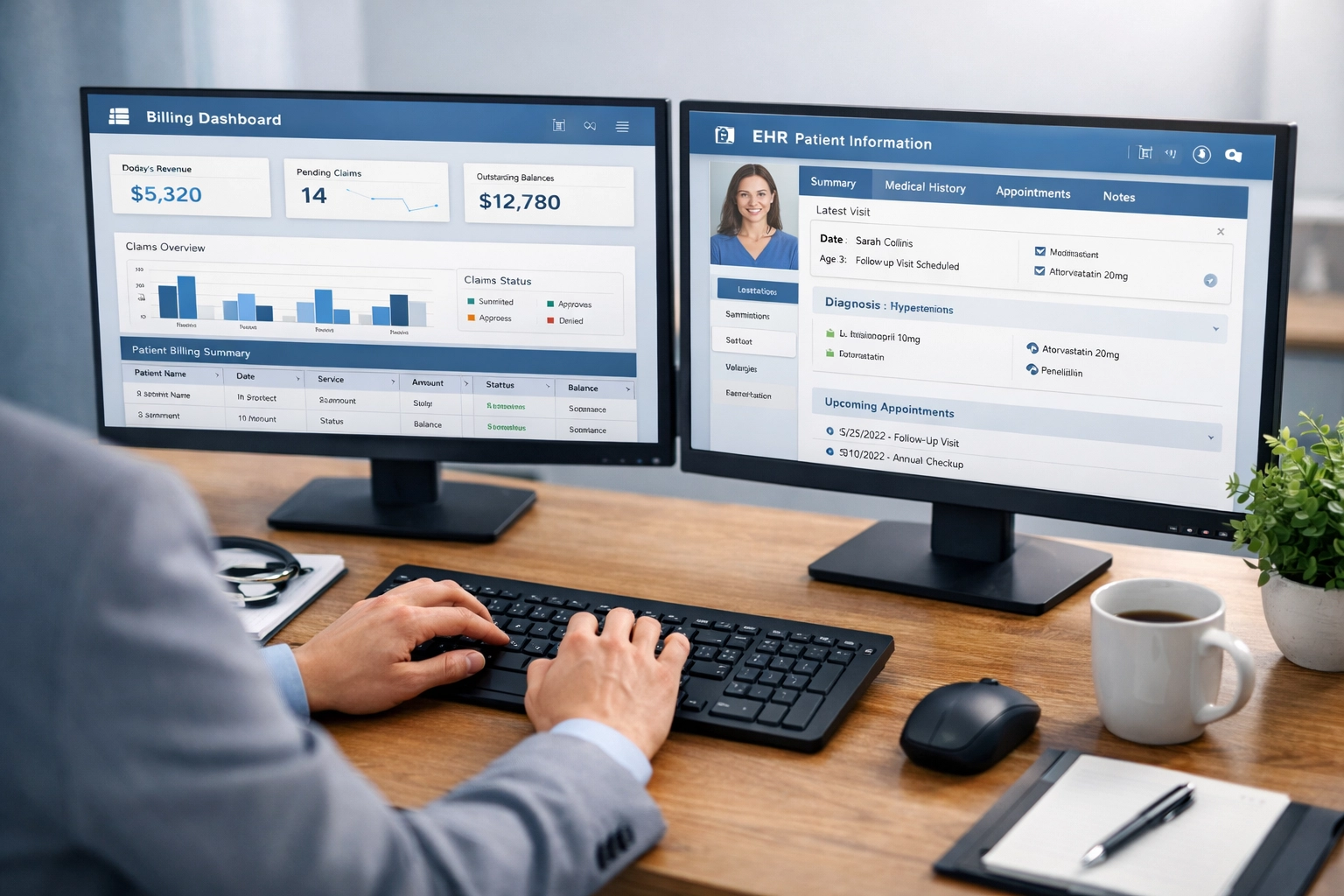
Your billing company's technology needs to play nicely with your existing systems. Confirm that their software seamlessly integrates with your EHR or practice management system. Clunky workarounds and manual data entry defeat the purpose of outsourcing.
Beyond basic integration, evaluate their technology for accounts receivable management, denial tracking, and real-time reporting capabilities. Ask about their security protocols: encryption standards, data backup procedures, and disaster recovery plans. Your patient data and financial information must be protected with enterprise-grade security.
6. Evaluate Performance Metrics and Reporting
Numbers don't lie. Request specific performance data from potential billing partners, including:
- Clean claims rate: Aim for 90% or higher to minimize denials and delays
- Days in accounts receivable: Lower numbers mean faster cash flow
- Claim submission timeframe: How quickly do they submit claims after service?
- Denial rate and resolution process: What percentage of claims are denied, and how aggressively do they work denials?
- Collection rates: What percentage of billed amounts do they actually collect?
Ask how frequently they provide performance reports and whether you'll have dashboard access to real-time data. Transparency in reporting indicates confidence in results.

7. Review Transparent and Flexible Pricing
Medical billing pricing models vary widely. Some companies charge a percentage of collections (typically 4-10%), others use per-claim fees, and many combine multiple fee structures.
Request a detailed breakdown of all costs: setup fees, monthly minimums, software charges, statement fees, and any other potential expenses. Watch out for contracts with hidden fees that surface later. Ensure the agreement clearly outlines what's included and what costs extra.
Also evaluate contract flexibility. Reasonable termination clauses protect you if the relationship doesn't work out. Be wary of companies that lock you into long-term contracts with steep early termination penalties.
8. Investigate Reputation and References
In the age of online reviews, there's no excuse for not researching a company's reputation. Check Google reviews, Better Business Bureau ratings, and industry forums. But don't stop there.
Request references from current and former clients. Ask those references pointed questions: Did the company deliver on its promises? How responsive is their customer service? Would they choose this partner again? Former clients can be especially candid about why they left.
Pay attention to client retention rates. Companies that keep clients long-term are doing something right.
9. Confirm Regulatory Compliance and Payer Knowledge
Healthcare regulations change constantly, and non-compliance can result in audits, fines, and revenue loss. Verify that your potential billing partner maintains strict HIPAA compliance, stays current with federal regulations, and has processes in place to adapt when rules change.
Beyond general compliance, confirm they understand the specific payers you work with. Do they have relationships with your major insurance companies? Do they understand regional payer quirks and preferences? This knowledge directly impacts how efficiently they can resolve claim issues and appeals.
10. Assess Customer Support and Accessibility
When claim issues arise or you have questions, responsive support isn't optional: it's essential. Evaluate the level of customer service you'll receive:
- Will you have a dedicated account manager as your single point of contact?
- What communication channels are available (phone, email, portal)?
- What are their typical response times for inquiries?
- Do they offer regular account reviews to discuss performance and optimization opportunities?
- Can they provide on-site visits for training or complex issue resolution?
The best billing companies view themselves as true partners, not just vendors processing claims. They should be invested in your success and proactive about identifying opportunities to improve your revenue cycle.

Making Your Decision
Choosing a medical billing company requires careful evaluation, but the right partnership pays dividends for years to come. By systematically assessing these 10 factors, you'll identify a billing partner that optimizes your revenue cycle, reduces administrative burden, and contributes to a more profitable practice.
At ALS Billing, we check every box on this list: especially our commitment to 100% USA-based operations. Our certified billing specialists, advanced technology, and transparent processes have helped countless practices improve their financial performance while reducing stress.

Ready to explore whether we're the right fit for your practice? Contact Rachel at (513) 493-1235 or visit www.alsbilling.com to schedule a consultation. Let's discuss how we can optimize your revenue cycle and give you back time to focus on what matters most( patient care.)